
This entry is a summary of the article “Street Smarts” by Graeme Green, published in the magazine Amateur Photographer, June 2026. The summery was written by Pranab Banerjee.
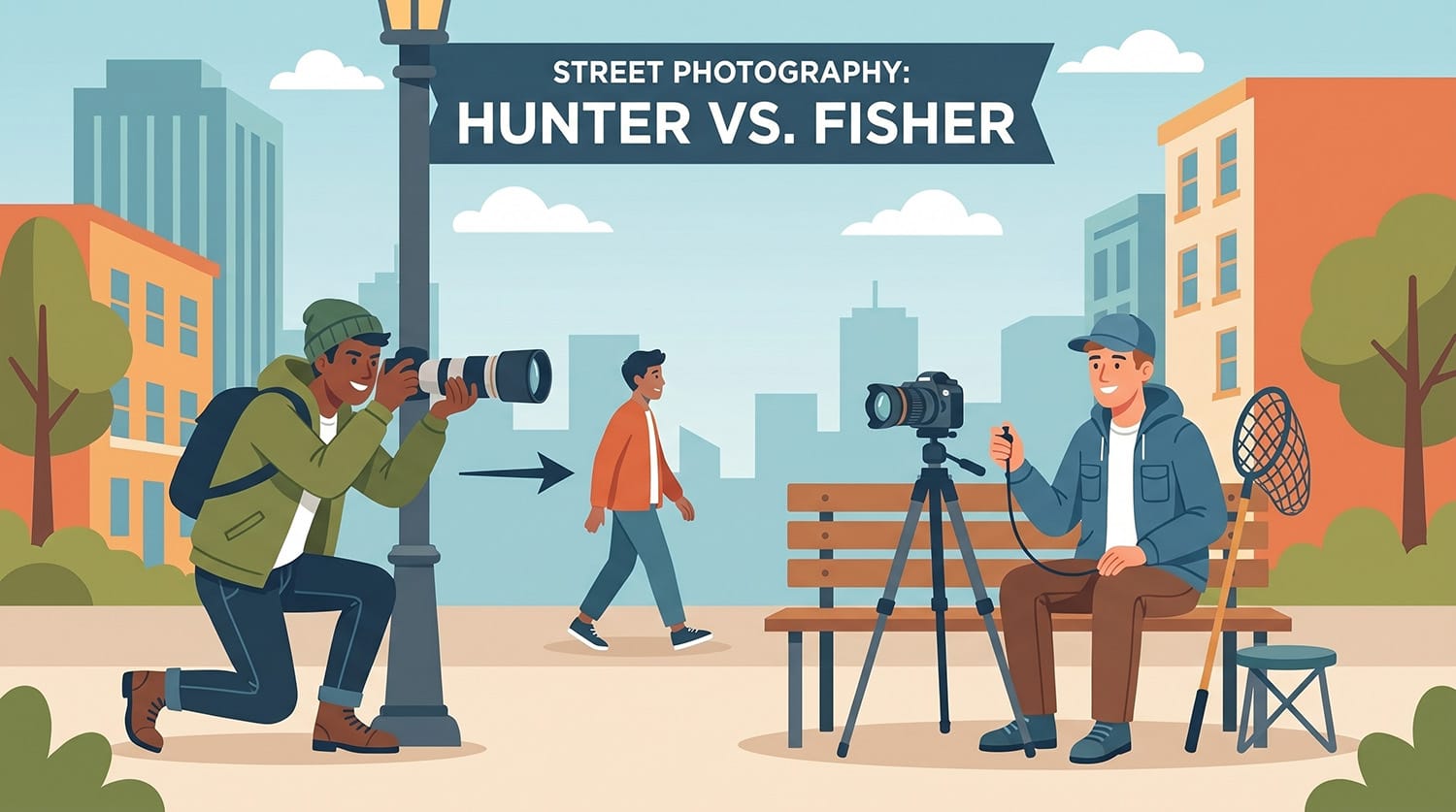
Sean Tucker and Joshua K Jackson are two influential street photographers who share their secrets about the art form. They discuss their approaches as ‘fishers’ (waiting for the right moment in a promising location) and ‘hunters’ (constantly moving to find subjects). Both photographers, originally from the UK, have produced a book, The Art of Street Photography, featuring their work along with advice for other photographers.
Classic street photography often involves capturing human interactions or juxtapositions with humor or tenderness, leaving room for viewer interpretation (the “Curiosity Gap”). However, Tucker and Jackson prefer a more artistic approach, influenced by photographers like Ernst Haas, Alex Webb, and Harry Gruyaert. They create abstract or impressionistic images, making creative use of light, shadow, color, shapes, reflections, and focusing on temporary city elements.
For beginners in street photography, Sean Tucker and Joshua K Jackson advise the following:
- Walk as far as you can and take as many photos as possible. Exploring different areas and perspectives will help broaden your understanding of the art form.
- Be unobtrusive and respectful in your approach, aiming for an honest, authentic moment without causing discomfort to others.
- Pay attention to ethics when photographing people, considering their comfort and privacy, especially children and homeless individuals.
- Be mindful of the changing times and adapt your approach to fit the growing suspicion of photographers in public due to social media.
Sean Tucker and Joshua K Jackson employ various techniques to create abstract or impressionistic images in their street photography:
- Light: They make use of the dynamic range between light and dark areas to create mood, mystery, and negative space in their photos. For instance, exposing for the brightest part of an image can result in dramatic shadows and a sense of depth.
- Shadow: Using the play of light and shadow can help emphasize certain subjects or aspects within an image, adding complexity and intrigue to the overall composition.
- Color: Both photographers experiment with color palettes, sometimes using complementary colors to create visual harmony, while other times employing contrasting hues for a more dynamic effect.
- Shapes: Paying attention to the arrangement of geometric shapes within an image can help create a sense of order or chaos, depending on the intended aesthetic. For example, using rectangular buildings or circular objects to form patterns can add structure to a photograph.
- Reflections: Reflections in windows, puddles, or other surfaces can provide interesting opportunities for abstraction and distortion, as they alter the perceived reality of the scene.
- Temporary city elements: Focusing on fleeting moments or temporary installations within urban environments can result in unique and striking images. For example, a construction site or a street artist’s mural might provide an interesting backdrop for capturing abstract shapes, colors, and textures.
They offer the following tips for capturing authentic, unscripted moments in street photography:
- Be patient: Wait for the right moment to present itself, observing people and situations until you find a compelling composition or interaction.
- Anticipate: Learn to predict what might happen next by studying body language and movements of subjects. This can help you prepare for a shot before it actually occurs.
- Use your surroundings: Utilize the environment to create interesting juxtapositions between people and objects, adding layers of meaning to the image.
- Don’t be afraid to get close: Approaching subjects carefully and respectfully can help you capture more intimate moments and reveal emotional depth in your photographs.
- Be aware of your surroundings: Always keep an eye on your environment and potential distractions that could disrupt the composition or mood of your shot.
- Shoot quickly: Street photography often requires quick reactions, so practice being able to compose and capture a shot in just a few seconds.
Sean Tucker and Joshua K Jackson approach candid portraits with respect for their subjects by following these guidelines:
- Be discreet: Avoid drawing attention to themselves or their cameras to minimize the impact on the subject’s natural behavior.
- Observe first: Study the subject’s body language, facial expressions, and interactions before taking a photograph to gain a better understanding of their personality and emotions.
- Ask for permission when necessary: If there is an opportunity to approach the subject and request a portrait, do so in a respectful and considerate manner, being mindful not to disrupt their day or invade their privacy.
- Respect personal boundaries: Be aware of cultural and individual differences regarding personal space and avoid violating any boundaries that may make the subject uncomfortable.
- Show empathy: Connect with the subject on a human level by showing genuine interest in them and their story, which can help establish trust and build rapport.
- Capture authentic moments: Focus on capturing candid moments that reveal the subject’s true personality and emotions rather than posed or contrived images.
- Be mindful of context: Consider the surrounding environment and any potential factors that may impact the subject’s comfort or emotional state, such as crowded streets or busy intersections.
The article contrasts the “hunter” vs “fisher” approaches to street photography.
- Hunter approach: This method involves actively seeking out interesting subjects or situations and approaching them with the intention of capturing a compelling image. Photographers who adopt this approach are often proactive, constantly moving and looking for opportunities, much like a hunter stalking its prey.
- Fisher approach: In contrast, the “fisher” approach involves waiting patiently in one location, observing the environment and people around them, and reacting to any promising moments that present themselves. Photographers who use this method are more passive and patient, waiting for the right moment to capture an authentic image, much like a fisherman waiting for a fish to bite on their line.