

At our August meeting, Paul Griffin shared a presentation on infrared photography with the FotoKlub. This post is based on his talk, with his sample images and a list of resources for anyone who wants to dig deeper.
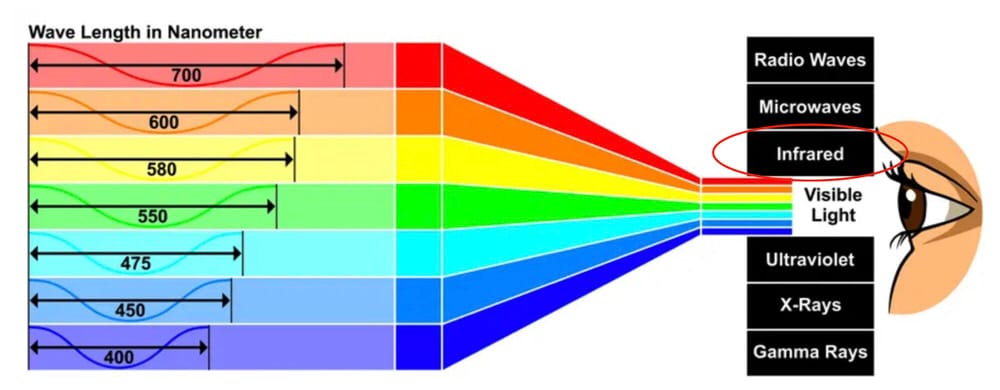
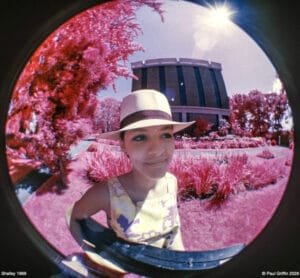
Standard film and digital cameras record the visible light spectrum. Infrared photography records a narrow band just beyond it, known as near infrared (NIR) light, roughly 700 to 1,200 nanometers. Foliage turns bright white, skies go dark, and familiar scenes take on an otherworldly look.
Infrared photography dates back to 1910. Infrared film was developed further during the world wars as an aerial surveillance tool, and after the war it was marketed as a specialty film for creative use. Kodak produced an infrared aerial film in the 1940s and in the 1960s released Ektachrome Infrared, which became the film of choice for false color infrared images.
Infrared Camera Conversation
Most digital cameras have an internal filter directly in front of the sensor that blocks infrared and ultraviolet light so photos look natural. To use a camera for infrared photography, this filter needs to be removed and replaced with one that lets infrared light through. Once converted, a regular camera can shoot handheld infrared photographs without long exposures.
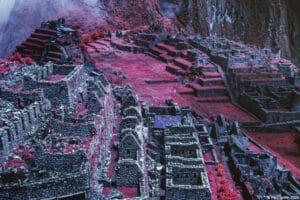
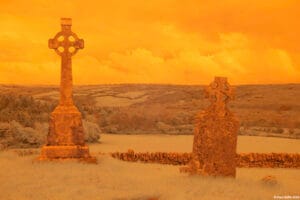
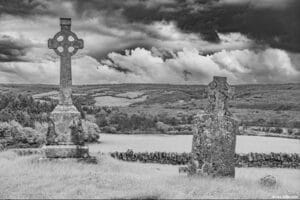
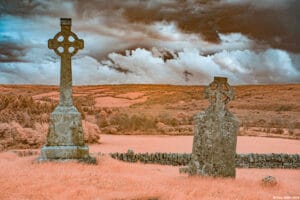
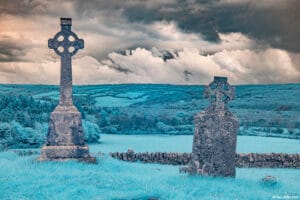
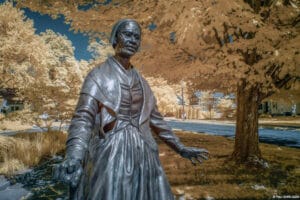
Sample Images




More Resources
Interested in learning more about infrared photography? Here you can find additional information:
- Infrared (IR) basics for digital photographers
- Rob Shea – Infrared Photography YouTube Channel
- Reed Hoffman – The Why and How of Infrared Photography
- An Introduction to Infrared Photography
- The Other World of Infrared Photography
Where can you get your digital camera converted for Infrared Photography? These are a few providers who offer this services: